









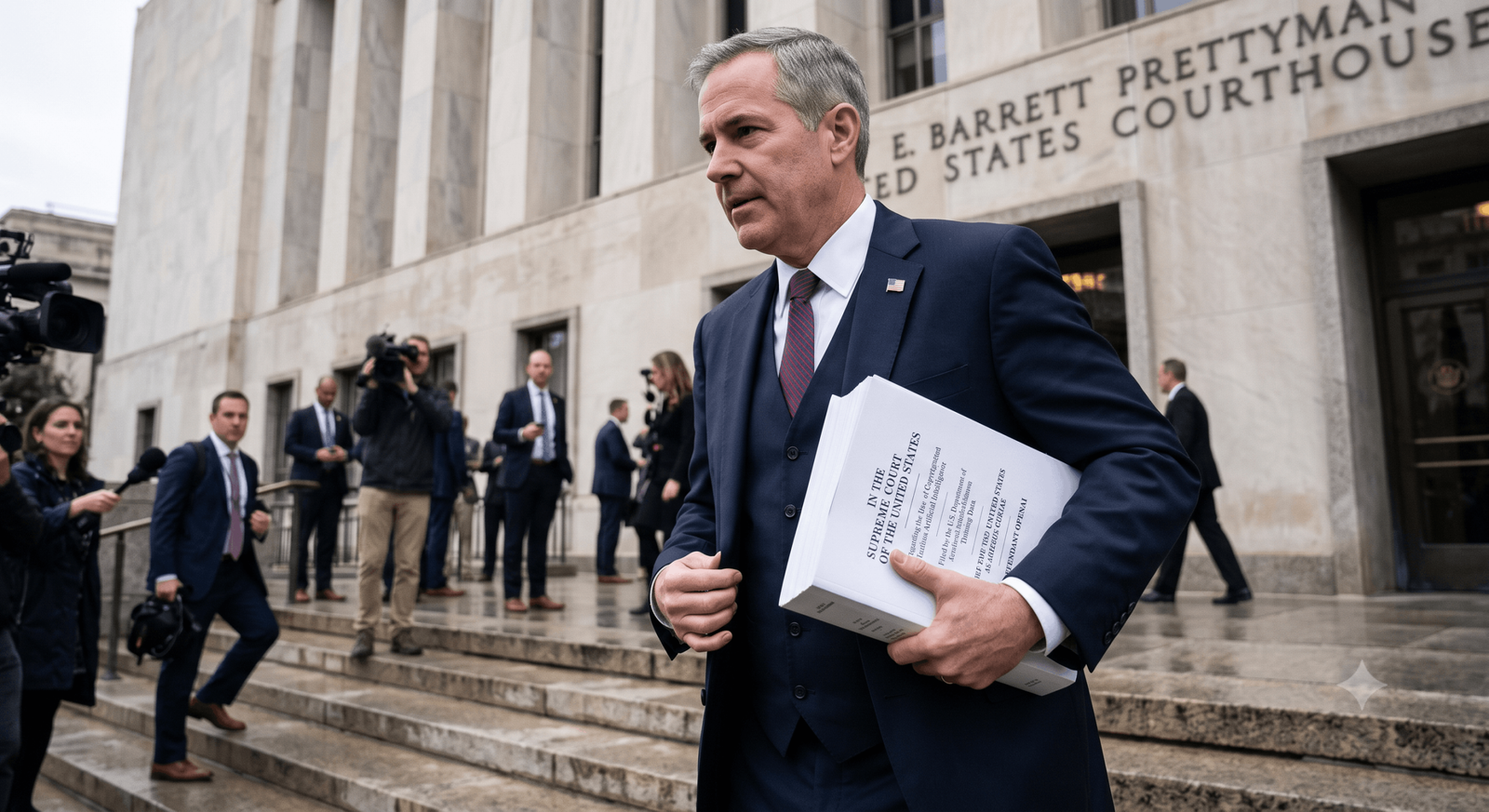
The filing carries no legal force, but it tells judges and publishers where federal policy now stands.
Twenty pages. That is how long the brief is that the Trump administration filed in the New York Times’ lawsuit against OpenAI, and the whole document points one way: training a large language model on copyrighted work nobody licensed should hold up as fair use. The Times sued over exactly that practice.
Read the filing and you notice what it leans on. Not much copyright doctrine. Mostly national interest. The United States, it argues, needs a strong and competitive AI industry, one that sets the global standard for how the technology gets used. It points back to the executive order Trump signed last year on removing barriers to American leadership in AI. Squeeze fair use too tightly around model training, the brief warns, and you slow scientific and creative work while denting American prosperity and economic mobility.
The Times is not fighting fresh ground. Last year Judge William Alsup approved a $1.5 billion settlement between Anthropic and a group of writers whose books ended up in its training data. Read the ruling closely, though, and the training itself was never the problem. Anthropic paid because it pulled those books from illegal shadow libraries. Alsup compared a model learning from text to a reader who wants to become a writer: it absorbs the work in order to make something else, not to reproduce it. That distinction, sourcing versus training, is doing enormous work in every case now moving through the courts.
– **No ruling.** The case belongs to the Southern District of New York.
– **No jurisdiction.** The brief’s authors are not deciding it.
– **Real weight.** Judges now have Washington’s position in the record.
Amicus filings do not bind anyone. They do shape the frame a judge reads the rest of the case in, and this one arrives with the federal government’s name on it. That is not nothing in a courtroom.
The open question is what happens to licensing deals if the courts decide nobody ever needed one.
WHY IT MATTERS: If you publish content, this changes your negotiating position. Licensing talks with AI firms only work while the alternative is expensive litigation, and Washington just made that alternative look weaker. If you build on these models, the opposite holds: the supply risk you were pricing into vendor contracts is shrinking. Decide now whether to license, sue, or wait.