






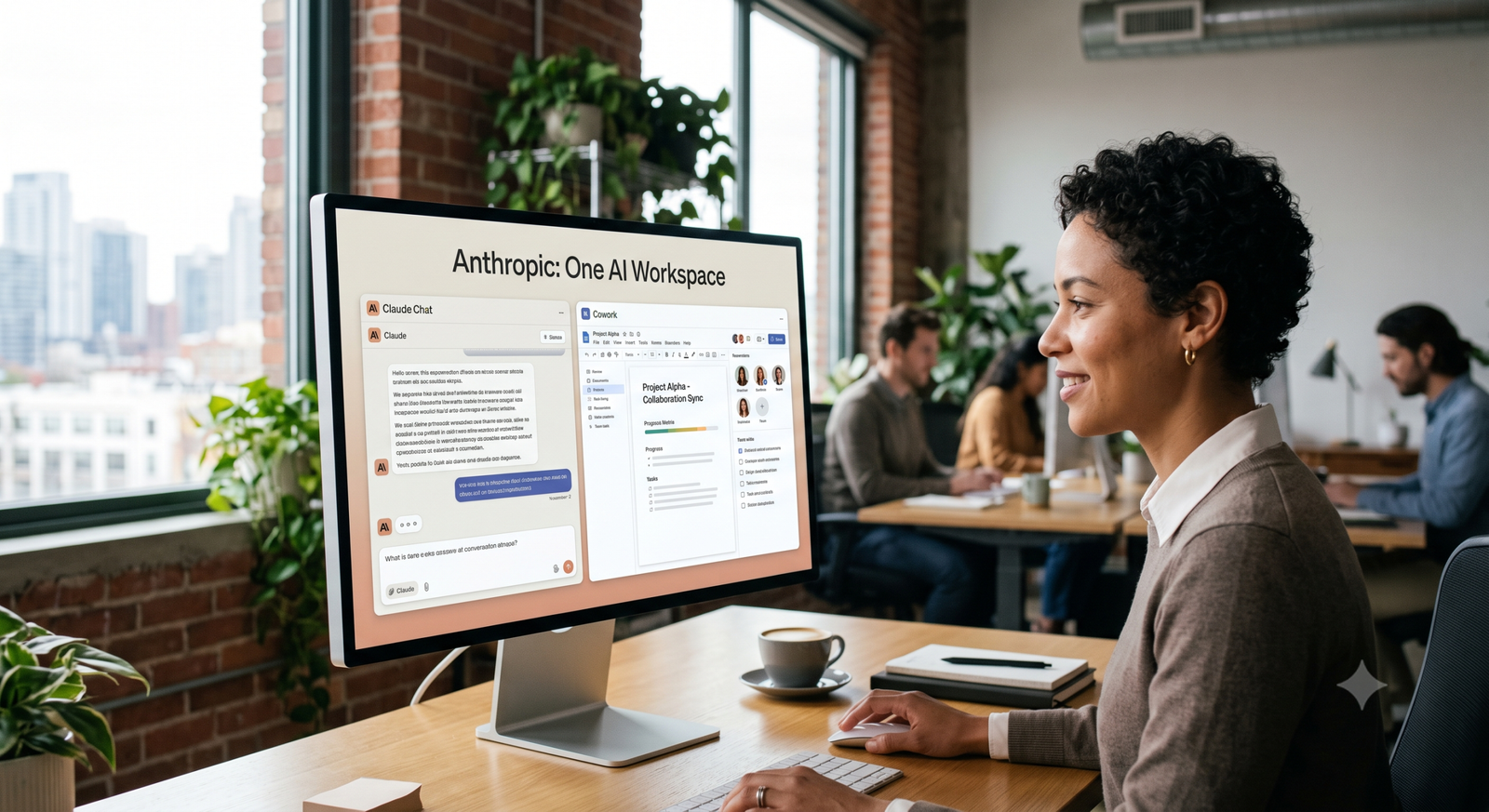
Anthropic is simplifying how people interact with Claude by bringing its major productivity tools together under a single interface.
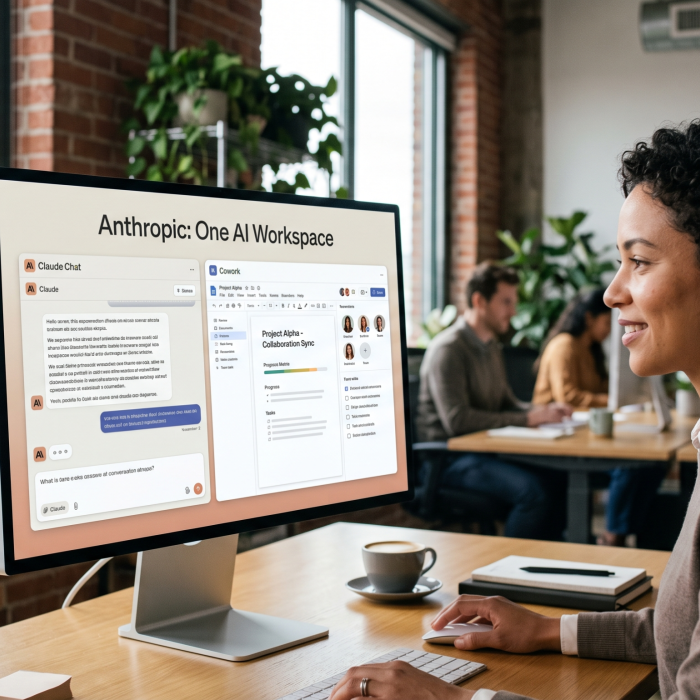
The company is merging Claude Chat and Cowork, allowing users to move between conversations, agentic work, and content creation without deciding which part of Claude they should open first.
The redesigned experience combines Chat, Cowork, and Artifacts inside one window, while Claude Design — Anthropic’s website and prototype creation capability — can also be accessed throughout the Claude experience.
It’s a relatively straightforward interface change, but it points toward a much bigger shift: AI assistants are evolving from chatbots into complete productivity environments.
Claude Will Decide Which Tool Your Request Needs
Previously, Claude users could face a simple but frustrating question: should this task be handled in Chat or Cowork?
Anthropic says customers sometimes struggled to choose the correct interface for different types of work.
The new design removes much of that decision-making.
Users can simply describe what they want to accomplish, and Claude can automatically route the request to the appropriate capability without requiring them to manually switch between tabs or windows.
That could make Claude feel less like a collection of separate AI features and more like a single intelligent workspace.
Instead of learning where every feature lives, users can focus on describing the outcome they want.
Claude Is Getting Serious About Presentations
Anthropic is also expanding Claude beyond conversations with dedicated presentation capabilities.
Users can ask the AI assistant to create, modify, and present slide decks directly within Claude.
Finished presentations can then be downloaded as either PowerPoint or PDF files, making the feature useful for business presentations, internal reports, sales decks, educational material, and other professional workflows.
This puts Claude into closer competition with established productivity software and the growing number of AI presentation tools.
Rather than generating an outline in a chatbot and transferring everything into presentation software manually, users can potentially complete more of the workflow in one environment.
Documents Become Collaborative AI Workspaces
Claude is receiving dedicated document functionality as well.
The new Docs experience allows users to collaborate with Claude while building longer pieces of content.
Users can create individual sections, ask questions about their work, and leave comments on completed portions of a document.
Documents and presentations can also be shared through links.
Importantly, Anthropic is extending the experience across devices. Users can edit generated content from their phones and monitor longer-running tasks from Claude’s mobile application.
For example, someone could ask Claude to begin preparing a document on their desktop and then check its progress later from their phone.
That makes Claude increasingly useful for workflows that don’t need to remain tied to a single device or active browser session.
Cowork’s Improved Memory Adds More Context
The unified interface follows Anthropic’s recent improvements to Cowork’s memory system.
Claude can now retain more relevant user context across conversations, reducing the need to repeatedly explain the same preferences, project details, or background information.
Combined with the new interface, that memory layer could become particularly important.
An AI workspace becomes significantly more valuable when it understands not only the current instruction but also the broader context surrounding ongoing work.
Pro and Max Users Get It First
Anthropic is rolling out the new experience first to subscribers on its Claude Pro and Max plans.
The features will gradually become available across web, desktop, and mobile over the coming weeks.
Anthropic says free users and team subscriptions will receive access later.
AI Productivity Is Moving Beyond Chat
The broader direction is becoming clear.
The first generation of generative AI products largely revolved around a text box: users typed questions and AI generated answers.
The next generation looks increasingly different.
AI systems are becoming workspaces capable of researching, writing, designing, creating presentations, manipulating files, remembering context, and completing longer tasks.
Anthropic’s decision to merge Chat and Cowork reflects that transition.
Users shouldn’t necessarily need to understand which AI mode or feature should handle a particular request.
They should be able to describe the work — and let Claude determine how to get it done.