








A cyberattack triggers a company-wide security warning
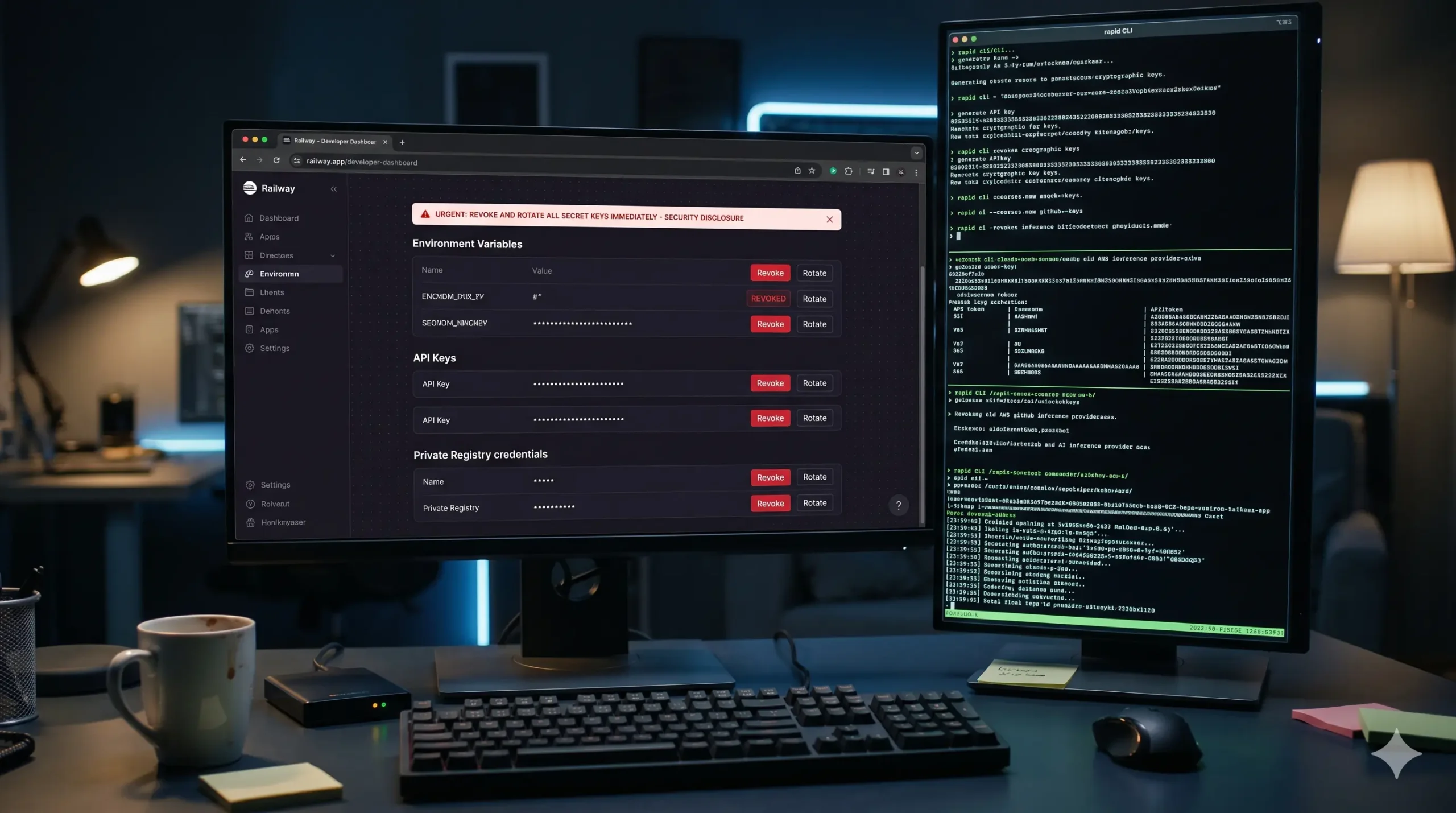
Cloud development platform Railway has warned its users to take immediate action to protect their accounts after a cyberattack potentially exposed sensitive customer credentials. The company is advising everyone on its platform to replace their API keys, cloud credentials, and other secrets, even though its initial investigation indicates that only a portion of its customers may have been affected.
The incident highlights the growing security challenges faced by platforms that manage application deployments, cloud infrastructure, and confidential developer information.
Railway enables developers to build, deploy, and manage applications using its cloud-based infrastructure. On Wednesday, the company disclosed that attackers may have gained access to encrypted environment variables, with some potentially exposed in decrypted form.
Why exposed environment variables are dangerous
Environment variables are commonly used by developers to store sensitive information required for applications to function. These details can include database passwords, API tokens, cloud access credentials, and keys connecting applications to external services.
If attackers obtain these credentials, they may be able to access connected systems, retrieve confidential information, or perform actions using the permissions assigned to legitimate users.
Although Railway believes the incident affected a limited group of customers, it has recommended that all users revoke and replace their existing keys. This precaution is intended to reduce the possibility of stolen credentials being reused to access customer accounts or connected infrastructure.
For developers, the incident serves as another reminder that protecting an application requires more than securing its source code. Credentials and third-party integrations can also become entry points for attackers.
Railway temporarily pauses deployments
During its investigation, Railway briefly suspended new application builds and deployments before beginning restoration activities. The move appears to have been part of its response to contain the incident and investigate the potential exposure.
However, several important details remain unknown. Railway has not disclosed the number of affected customers or identified the precise cause of the breach. It has also not publicly explained which internal systems were compromised.
Founder and CEO Jake Cooper indicated that the company intends to publish a post-incident report explaining what happened. Until that information becomes available, the full scope and impact of the attack remain uncertain.
Possible links to attacks targeting AI infrastructure
Railway suggested that the incident could be connected to a wider campaign targeting technology platforms associated with AI inference services.
Such attacks can involve attempts to manipulate AI systems through carefully designed prompts, encouraging them to reveal information that should remain protected. If successful, these techniques could expose confidential data or credentials available to connected tools and services.
The disclosure follows a separate incident involving OpenCode, an open-source AI coding tool. The company reported that attackers obtained API keys and other sensitive customer information, affecting more than 1% of its customers. OpenCode linked the activity to an AI distillation attack, in which automated agents attempt to extract information from AI models at scale.
These incidents raise questions about how attackers may exploit AI-powered development tools and the infrastructure supporting them.
A wider cybersecurity warning for technology companies
The Railway incident also comes amid broader concerns about cyberattacks against technology organizations. The U.S. cybersecurity agency CISA has recently warned about large-scale attacks attributed to China-based AI companies seeking to improve their models.
Separately, critical vulnerabilities in PHP, a programming language used by a substantial portion of websites, have prompted organizations to patch affected systems. Security researchers at Amazon reportedly found evidence that the vulnerabilities, known as PHP2Shell, were being exploited before patches became publicly available.
The PHP vulnerabilities appear to be a separate issue from the Railway breach, but both developments demonstrate how quickly security weaknesses can become operational risks.
What developers should do now
Developers using Railway should rotate their API keys and cloud credentials, review access permissions, inspect account activity for suspicious behavior, and update any applications that depend on replaced secrets. They should also avoid storing unnecessary credentials in environment variables and use appropriate secret-management controls wherever possible.
The takeaway: Railway’s breach demonstrates why credential security must remain a priority for every developer and cloud platform. Even when the confirmed impact appears limited, replacing potentially exposed secrets and investigating unusual activity can help prevent a security incident from becoming a much larger compromise.