









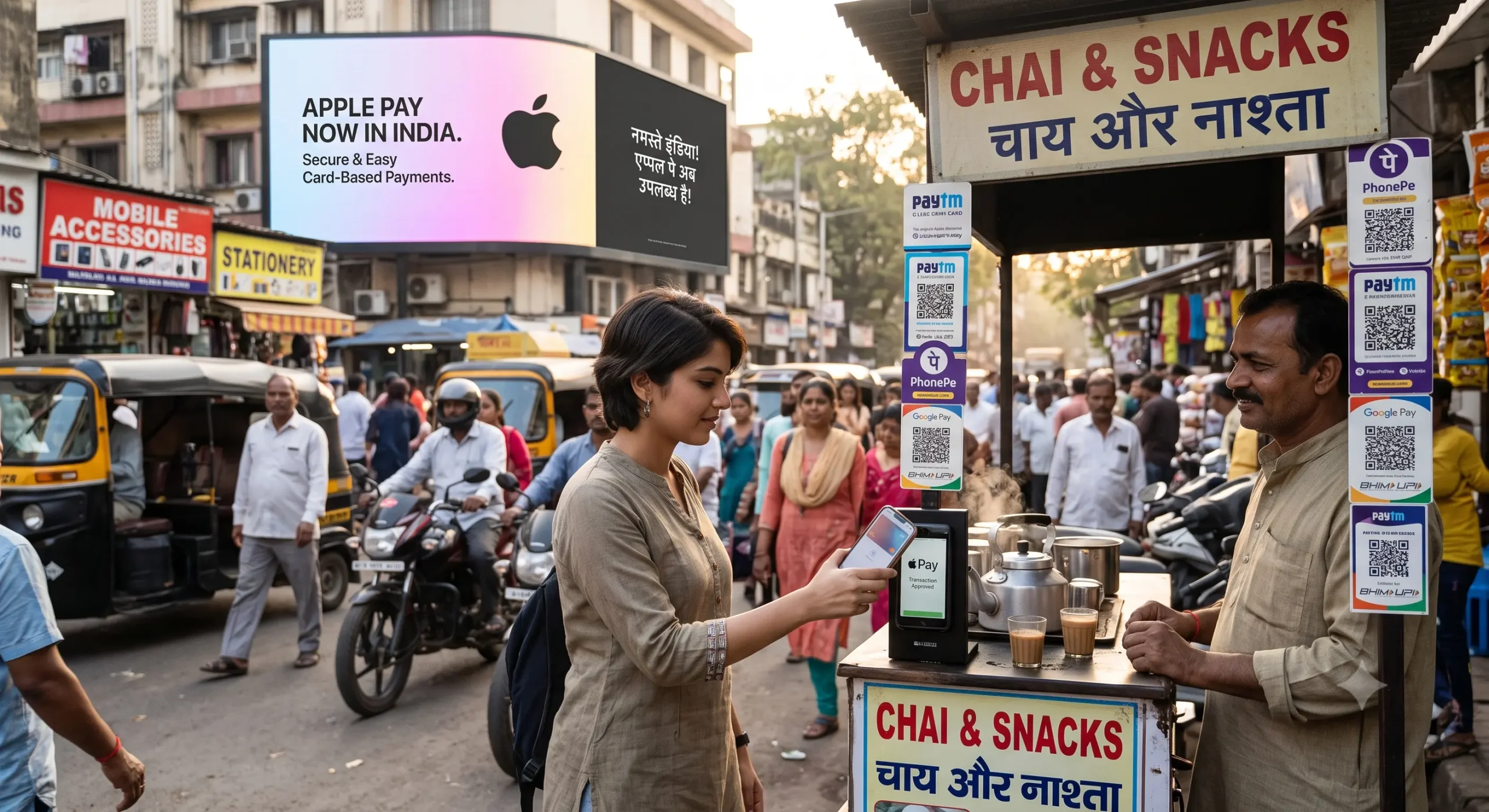
After years of waiting, Apple Pay has officially started rolling out in India, marking a major expansion for Apple’s payments ecosystem. The launch is initially being supported by Axis Bank, giving eligible customers a new way to use their cards for contactless and online payments.
India has been a challenging market for Apple Pay because digital payments here are heavily dominated by Unified Payments Interface (UPI). Unlike traditional card payments, UPI allows users to transfer money directly between bank accounts, making it deeply integrated into everyday transactions.
Axis Bank Leads the Initial Rollout
The first phase of Apple Pay in India is relatively limited. Customers with eligible Axis Bank Visa and Mastercard cards can use the service where Apple Pay has been enabled.
However, RuPay cards are not currently supported, which means a significant portion of India’s domestic card ecosystem remains outside the initial launch.
Apple Pay acceptance will also depend on merchants and payment terminals being configured to support the service.
Apple says customers will eventually be able to use Apple Pay at millions of merchant locations across India. Some of the businesses mentioned as supporting the service include Blinkit, Croma, Ixigo, Reliance brands, Tata 1mg and Zomato.
To make this possible, Apple has worked with several payment technology companies, including Cashfree, JusPay, Mswipe, Paytm, PayU, Pine Labs, Razorpay and Worldline.
Why India Is Different
Apple Pay’s arrival in India comes into a payments ecosystem that works very differently from markets such as the United States.
In many countries, card networks play a central role in everyday digital payments. In India, however, UPI has become the dominant infrastructure for instant bank-to-bank transactions.
That difference creates an additional challenge for Apple Pay.
Apple Pay primarily works by connecting a user’s supported payment card to Apple’s platform. For the service to become widely available, individual banks, card networks, payment providers and merchants all need to support the system.
As a result, expanding Apple Pay across India requires significantly more coordination than simply launching the service on Apple’s devices.
Banking Partnerships Could Be the Next Big Step
The initial partnership with Axis Bank may only be the beginning. Other major financial institutions, including HDFC Bank, ICICI Bank and SBI Card, are not part of the launch at this stage.
According to people familiar with the discussions, commercial terms have been an important part of negotiations between Apple and banks.
Reports indicate that Apple is seeking a transaction fee of around 0.2%, or 20 basis points. That could represent a meaningful portion of the revenue available within the payments ecosystem.
The negotiations could therefore influence how quickly Apple Pay expands to additional banks and cardholders.
What Comes Next for Apple Pay in India?
The launch gives Apple a foothold in one of the world’s largest digital-payment markets, but widespread adoption may take time.
For Indian consumers already comfortable with UPI, Apple Pay will need to offer a compelling reason to use cards through Apple’s ecosystem. At the same time, broader bank support, more merchant acceptance and compatibility with additional card networks could determine how far the service expands.
For now, Apple Pay’s arrival represents an important new chapter in India’s increasingly competitive digital payments landscape. The bigger question is whether Apple’s card-focused approach can establish a significant place alongside India’s already deeply entrenched UPI ecosystem.