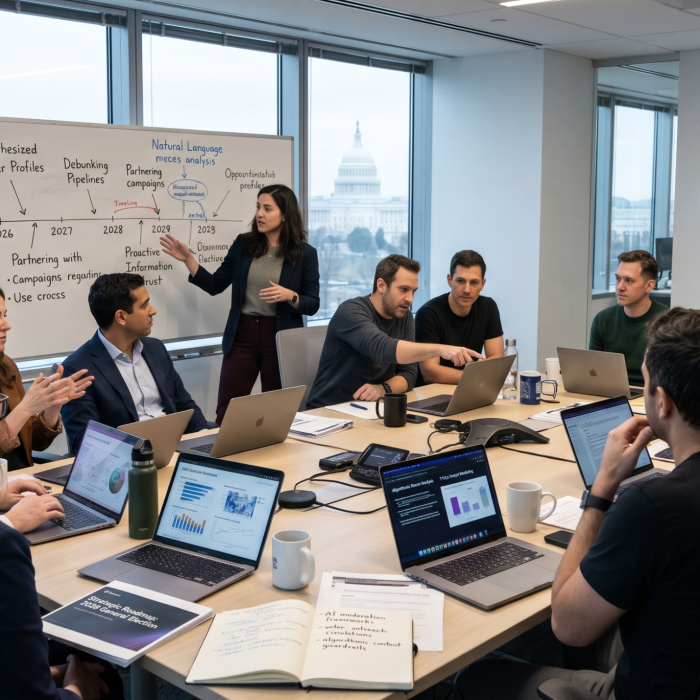








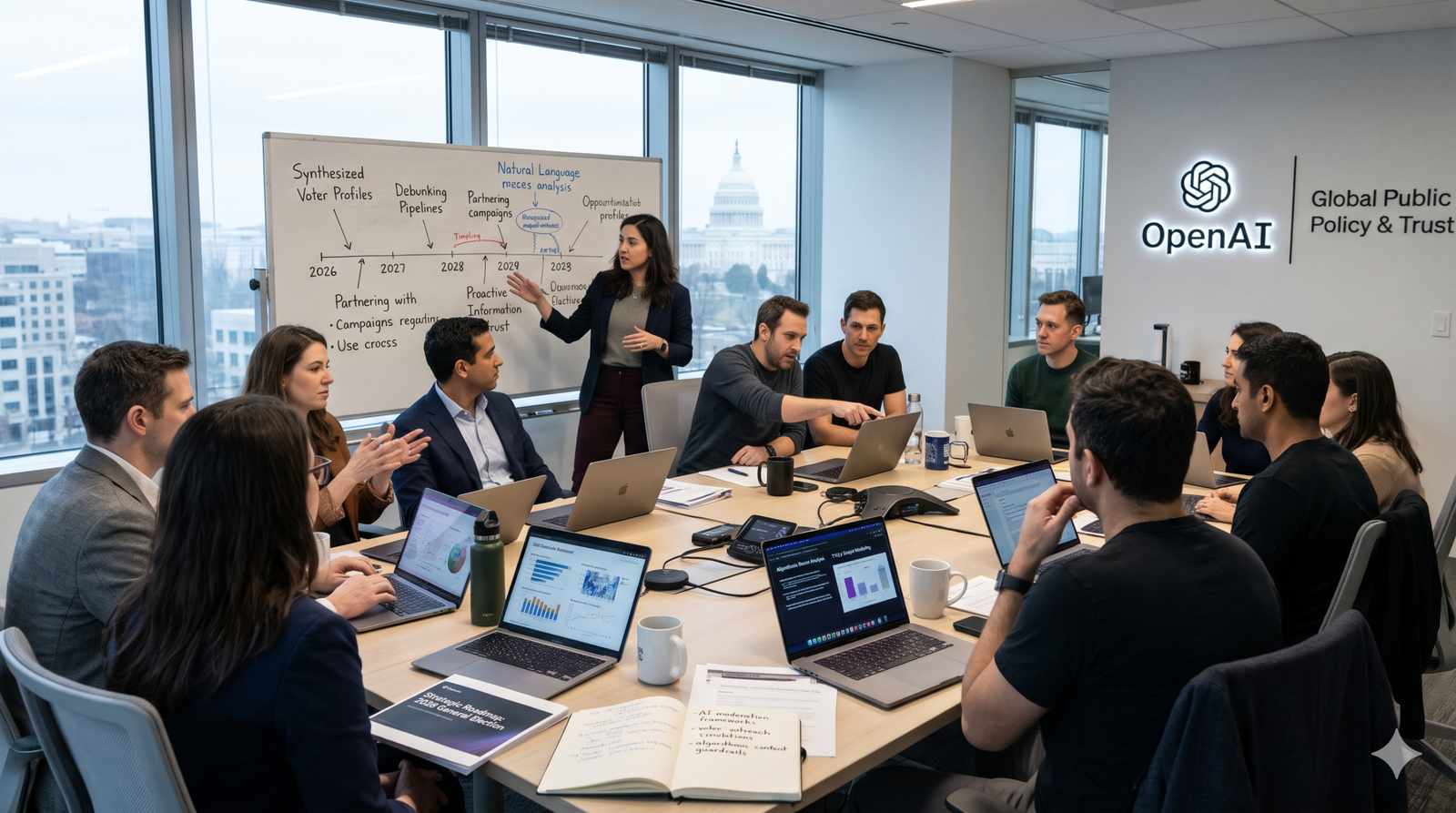
Artificial intelligence could become one of the biggest political issues in the 2028 presidential race. OpenAI is already pushing policymakers to develop an economic vision that addresses public concerns while encouraging wider AI adoption.
The growing influence of artificial intelligence is beginning to extend beyond technology companies and into political discussions. OpenAI is now looking ahead to the 2028 US presidential election, believing that AI could become a defining issue for voters, politicians, and the country’s economic future.
Chris Lehane, OpenAI’s Chief Global Affairs Officer, recently published an essay outlining how the US government should prepare for an economy increasingly shaped by AI. He believes political leaders need to move beyond simply criticizing the technology and instead develop policies that allow ordinary Americans to benefit from its growth.
Lehane compares the potential economic transformation driven by AI to President Franklin D. Roosevelt’s New Deal, which introduced major reforms and worker protections during the 1930s. According to him, Americans are once again worried about economic security, employment opportunities, and their ability to control their financial futures.
He proposes five major policy priorities covering workforce development, education, AI safety, child protection, and data center infrastructure.
AI Could Become a Major Election Issue
Although artificial intelligence was not among the biggest topics during the recent US midterm elections, concerns about data centers attracted attention from voters across political parties.
As the 2028 election approaches, affordability could become a central campaign issue. Rising electricity costs, inflation, and concerns about job security may push AI further into political conversations.
Many Americans are questioning whether AI will create better opportunities or mainly increase the wealth and influence of major technology companies.
Lehane argues that politicians should create an economic environment where people can participate in AI-driven growth. However, critics believe his proposals do not go far enough to protect workers from automation or ensure that the financial benefits are shared fairly.
Kate Brennan from the AI Now Institute has questioned OpenAI’s approach, suggesting that the company’s current messaging represents a shift from its earlier focus on reducing regulatory restrictions and accelerating AI development.
Questions About Workers and Economic Equality
One of Lehane’s proposals focuses on updating tax policies to encourage AI education, entrepreneurship, employee ownership, and profit-sharing.
These ideas could help workers develop new skills and participate in emerging business opportunities. However, they do not necessarily guarantee that employees will receive a fair share of the wealth generated by AI.
Critics argue that stronger measures are needed, including corporate tax reforms, incentives for companies that hire human workers, and policies that prevent powerful technology companies from dominating the market.
The bigger question remains whether AI will improve economic opportunities for everyone or create additional advantages for companies that already control significant resources.
Data Centers, Education, and AI Safety
Data center development is another important part of Lehane’s vision. These facilities require significant investment and energy, but they can also generate construction jobs and local tax revenue.
He warns that restricting data center construction could weaken America’s competitive position against China in the global AI race. However, communities are increasingly concerned about electricity consumption, rising utility bills, and the environmental impact of large infrastructure projects.
Education and child safety also feature prominently in his proposals. Lehane supports age-appropriate AI protections, particularly for minors interacting with AI companions. He also believes schools should introduce AI tools rather than completely exclude them, arguing that unequal access could widen the education gap.
On AI safety, he calls for enforceable standards, independent testing, public oversight, and mechanisms that could restrict or shut down dangerous AI systems.
However, OpenAI’s previous opposition to California’s SB 1047 AI safety legislation has raised questions about how strongly the company supports mandatory regulation.
The Bigger Question: Who Benefits From AI?
Lehane ultimately presents artificial intelligence as an opportunity to strengthen America’s economy and expand opportunities for the middle class.
But there is an important distinction between encouraging people to adopt AI and ensuring they benefit from its economic impact.
As AI becomes more integrated into workplaces, classrooms, healthcare, and government services, maintaining meaningful human control will also become increasingly important.
The 2028 election could therefore become a major turning point in determining how America regulates AI, protects workers, and distributes the wealth created by automation.
For OpenAI, shaping this conversation early could help influence the policies that determine the industry’s future. For voters, the real question is whether AI will create prosperity for the wider population or primarily benefit the companies building it.