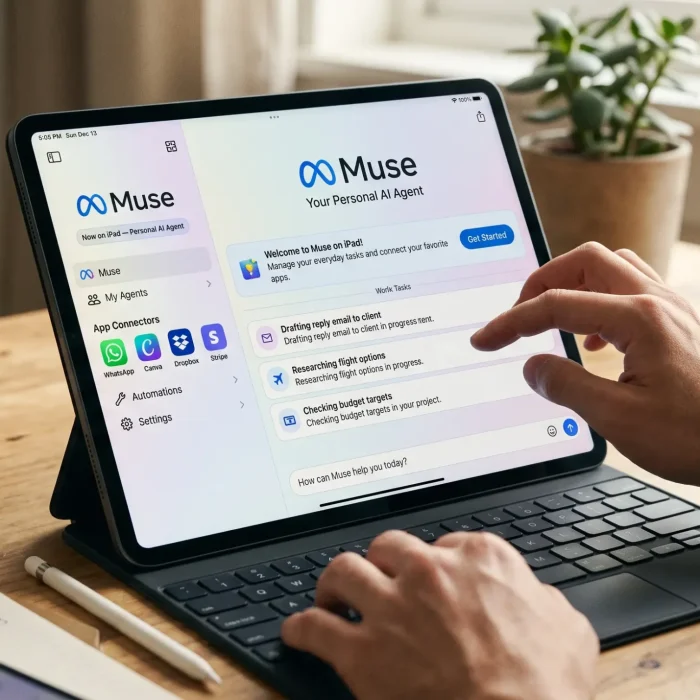








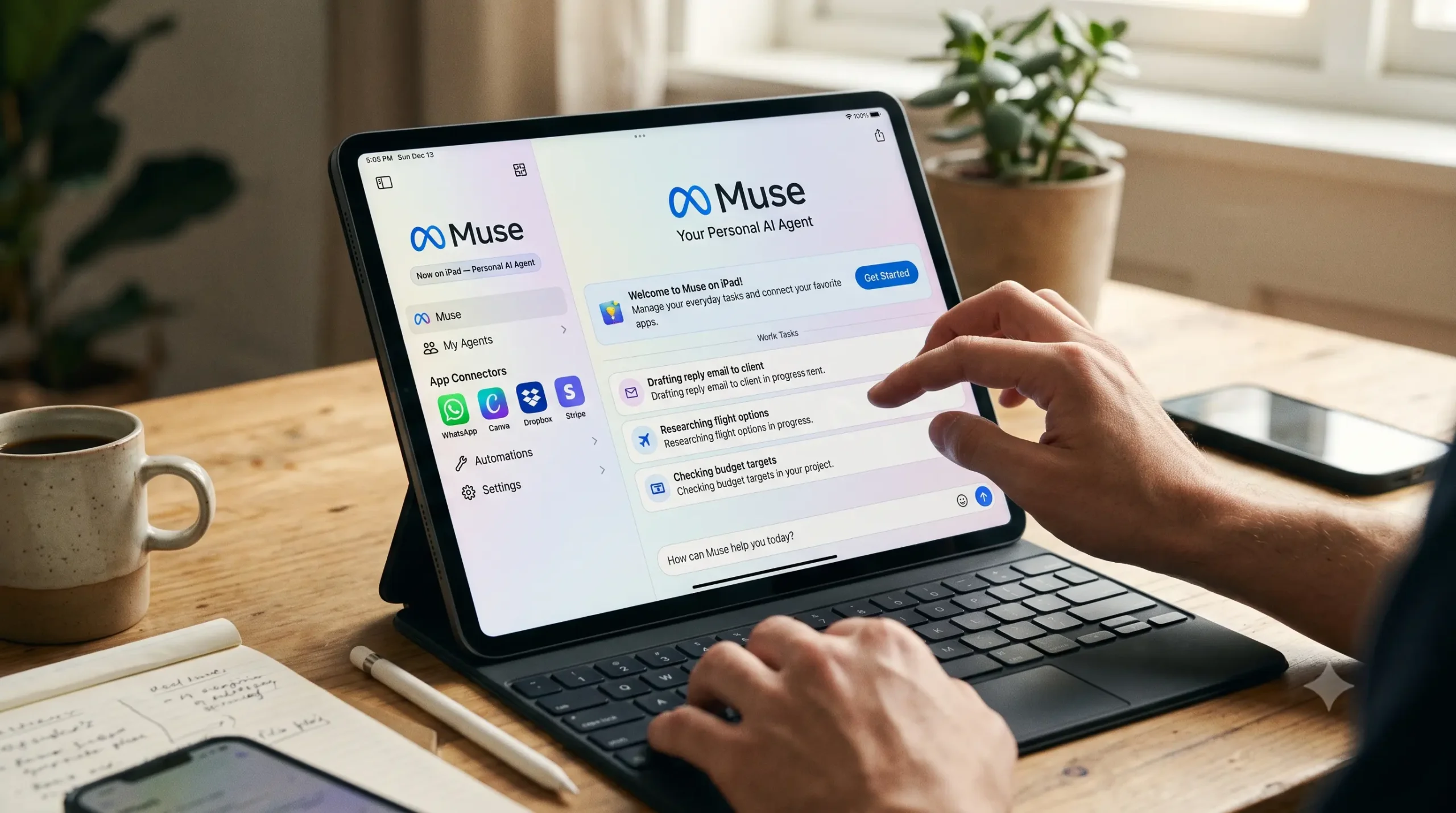
Meta is moving quickly to expand its AI assistant strategy. The company has launched a dedicated iPad version of Muse, bringing the AI-powered assistant to Apple’s tablet only about a month after its debut on iPhone.
The speed of the rollout stands out. Instagram, another major Meta product, took many years before arriving on the iPad, while Muse has made the jump almost immediately. The difference is partly explained by Muse’s interface, which relies heavily on text and conversational interactions rather than demanding complex image and video layouts.
Muse Is Growing Quickly
Muse first arrived on iOS and Android on September 8, and early adoption appears strong. Estimates from market intelligence company Sensor Tower suggest the app has already passed 6.6 million installs.
The growth places Muse among an increasingly crowded group of consumer AI assistants competing to become a digital helper for everyday tasks.
Rather than functioning only as a chatbot, Muse is designed to work with connected online services. Users can give the assistant access to areas such as email, calendars, meetings, bills, shopping, and other parts of their digital lives.
Once connected, Muse can assist with tasks such as making reservations, ordering products, organizing goals, and completing purchases.
Connectors Give Muse Access to More Services
A major part of Meta’s strategy is its growing collection of integrations, which the company refers to as connectors.
These connectors allow users to decide which services Muse can access. Instead of giving the AI unrestricted control, people can selectively connect individual accounts depending on the tasks they want the assistant to handle.
The iPad release also comes with an expanded selection of integrations. Meta has added services that are particularly useful for professionals and small businesses, including Asana, Canva, Dropbox, Figma, QuickBooks, GitHub, Klaviyo, and Zoom.
The company has also introduced connections for Meta advertising accounts, along with productivity tools such as Notion and Granola.
This broader ecosystem suggests that Meta wants Muse to become more than a personal chatbot. The long-term goal appears to be an AI agent capable of working across multiple services and handling tasks on a user’s behalf.
Shopping Is Becoming Part of the Experience
Meta is also pushing Muse deeper into online shopping.
The company has recently added retail partners including Best Buy, Gap, Sephora, Walmart, and Wayfair. Through these integrations, Muse can potentially browse participating retailers and complete purchases for users.
However, agent-driven shopping is still in its early stages. Websites sometimes identify automated agents as bots and prevent them from accessing pages or completing actions. That creates a major obstacle for companies trying to build AI agents that can reliably operate across the internet.
Meta Wants AI Agents to Identify Themselves
Meta is working on a possible solution to this problem.
The company recently said it is collaborating with industry partners on an open standard that could allow personal AI agents to identify themselves to businesses.
The idea is relatively straightforward: websites should be able to distinguish authorized personal AI assistants from potentially harmful or unwanted automated traffic.
If successful, such a system could make it easier for AI agents to interact with online services while giving businesses greater control over which automated systems they allow.
What This Means for Muse
The rapid arrival of Muse on iPad, its growing user base, expanding connectors, and new shopping capabilities show that Meta is moving aggressively in the AI-agent market.
The bigger question is whether users will become comfortable allowing an AI system to manage increasingly important parts of their digital lives.
For now, Meta appears focused on building the infrastructure needed to make that possible. If its approach succeeds, Muse could evolve from a conversational assistant into a much more capable digital agent that works across work, shopping, productivity, and everyday online tasks.