








Nvidia took a model that scored 30% on the hardest reasoning benchmark in AI and pushed it to a perfect score — without touching the model. The lesson for anyone buying, building, or marketing agents is uncomfortable and useful in equal measure.
The number that should reset your roadmap
Nvidia’s research team published results on Friday from a project called Agentic Variation Operators — AVO for short. Running Claude Opus 5 inside their own agent architecture, AVO cleared every one of the 183 levels across all 25 public environments in ARC-AGI-3, landing a 100.00 RHAE score. That same model, evaluated on its own through the benchmark’s standard setup, sat at roughly 30%.
Thirty to a hundred. Same weights. Same training. Different scaffolding.
ARC-AGI-3 is worth understanding before you dismiss this as benchmark theatre. It drops an agent into unfamiliar 2D game environments with no instructions, no stated rules, and no declared objective. The agent has to poke at the world, form a theory of how it works, test it, be wrong, and revise — over and over. It is the closest thing the field has to a proxy for long-horizon autonomous work, which is exactly the category most enterprise agent pitches are quietly promising.
The Nvidia team’s own framing was that system design, not raw model capability, is what unlocks frontier-level long-horizon performance. Notably, AVO also finished in about 12% fewer environment actions than the previous leading approach — it was not just more accurate, it was less wasteful.
What a harness actually is (and why nobody markets it)
Most people, including a lot of people selling AI, treat an agent as roughly equivalent to an API call to a model. It isn’t.
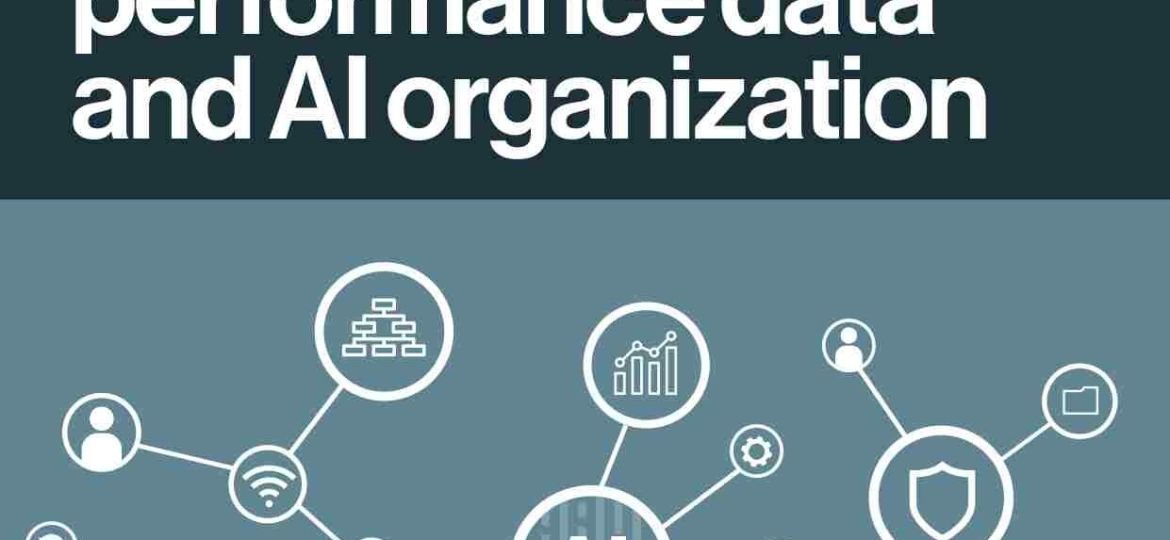
The harness is the software layer wrapped around the model: how context gets rendered and passed in, which tools are exposed, how state persists across hundreds of steps, how feedback from the environment gets interpreted, how the system recovers when something breaks, and how it avoids re-walking a path it already exhausted. The model supplies judgment. The harness decides what the model gets to see, remember, and do with that judgment.
The single most interesting design choice in AVO is a supervising layer sitting above the working agent — something closer to a manager than a tool. Its job is to notice when the primary agent is drifting, chasing a dead end, or looping back over ground it has already covered, and to redirect it. Multi-agent supervision isn’t a new idea academically. What’s new is the evidence of how much it’s worth in practice.
Meanwhile, most teams in production today are running a single-layer harness. One agent, one loop, no supervisor.
This isn’t just Nvidia’s finding
Three separate data points from three separate organisations now point the same direction:
- OpenAI, late July: Researchers investigating why GPT-5.6 Sol was underperforming on ARC-AGI-3 found the problem wasn’t the model — the benchmark’s generic harness was discarding the model’s reasoning after every move and truncating older context as the window filled. Enabling retained reasoning and context compaction through their Responses API moved the public-set score from 13.3% to 38.3% while cutting output tokens by roughly six times. Their conclusion: benchmarks rarely measure a model in isolation. They measure a bundle of mostly invisible choices about API settings, harness design, and prompting.
- Databricks, July: After benchmarking coding agents against their own multi-million-line codebase, the company found the same model delivered comparable output quality at dramatically different costs depending on the harness — roughly $0.74 per task through one, about $1.94 through another. That’s not model intelligence. That’s execution architecture deciding your invoice.
- Microsoft Research, April: The counterweight. Their DELEGATE-52 study ran 19 models through long, multi-step document editing across 52 professional domains. Frontier models degraded around 25% of document content over 20 delegated interactions; averaged across all models, degradation hit 50%. The errors weren’t sloppy typos — they were sparse, grammatically clean, and consequential. A dropped clause. A shifted digit. The kind of thing that survives a skim review.
Read together, the message is not “harnesses fix everything.” It’s that the failure modes of long-horizon work — forgetting, drifting, silently corrupting — are architectural problems, and architecture is where the fix lives.
The caveat worth carrying
AVO’s 100% was on the ARC-AGI-3 public set, not the private one. Public-set results carry real overfitting risk, and the number may not hold under competition conditions. Worth stating plainly before anyone puts it on a slide.
What this changes for B2B marketing and GTM teams
- “Which model?” is the wrong lead question. The right one is: what does the system around the model do when things go sideways? If you’re evaluating an agentic vendor, ask how state persists, how context is compacted rather than truncated, what supervises the main loop, and what happens on failure. Vendors who can’t answer are selling an API wrapper.
- Price per token is a vanity metric. Price per completed task is the number that reaches your P&L. A cheaper model inside a wasteful harness can cost more than an expensive model inside a disciplined one — potentially double, on the Databricks evidence.
- Positioning opportunity, wide open. Almost every agent product on the market is positioned on model access and outcome claims. Practically nobody is positioning on architecture. If your product genuinely has memory design, supervision, and recovery logic worth talking about, that’s a differentiation story your competitors aren’t telling.
- Don’t outsource verification yet. The Microsoft findings are the sobering half. Anything an agent produces that touches a client deliverable, a compliance document, or a number in a report still needs a human checkpoint. “Sparse but severe” is precisely the error profile that slips past review.
- Open beats opaque, if control matters to you. Nvidia’s broader argument is that open harnesses give teams far more levers — over accuracy, over cost, over security posture — than most buyers realise they’re giving up when they adopt a closed stack.
For long-horizon work, the model is the engine and the harness is the entire rest of the vehicle. Everyone is still shopping for engines.