







Apple introduces new safeguards to give Mac users greater control over AI-powered applications
Artificial intelligence is becoming more capable of handling everyday tasks, but its growing access to personal information is creating new privacy challenges. Apple is now taking steps to address these concerns by introducing additional security controls for Mac users.
The company has announced a series of changes designed to make it easier for users to understand and manage the permissions granted to AI agents and other applications. The update comes as more AI tools seek extensive access to files, applications, and system functions to perform tasks automatically.
Apple is warning developers that granting an application unrestricted access to a Mac can expose sensitive personal information. In a recent developer-focused blog post, the company emphasized that users should carefully consider the risks before approving such permissions.
Why AI Agents Are Becoming a Privacy Concern
Unlike traditional AI chatbots that primarily respond to questions, AI agents can interact directly with a computer. They may open applications, manage files, navigate software, and execute tasks on behalf of users.
Although these capabilities offer significant productivity benefits, they also introduce new security risks. An agent with broad system permissions could potentially access private documents, personal messages, and other sensitive information.
Recent incidents have raised concerns about these risks. Reports involving Meta’s Muse application alleged that private messages were accessed without user consent. Separately, a report highlighted a vulnerability in ChatGPT’s Mac application that could have exposed sensitive information to attackers.
These developments have encouraged Apple to rethink how macOS handles applications requesting extensive system access.
Interestingly, the company is also benefiting from the growing interest in locally running AI models. Devices such as the Mac mini and Mac Studio have attracted AI enthusiasts who want to operate powerful AI systems directly on their computers. Apple must therefore balance the growing demand for AI capabilities with its long-standing focus on user privacy.
What’s Changing in macOS Security?
Apple is introducing several improvements to its permission system, giving users more transparency and control over applications that request elevated access.
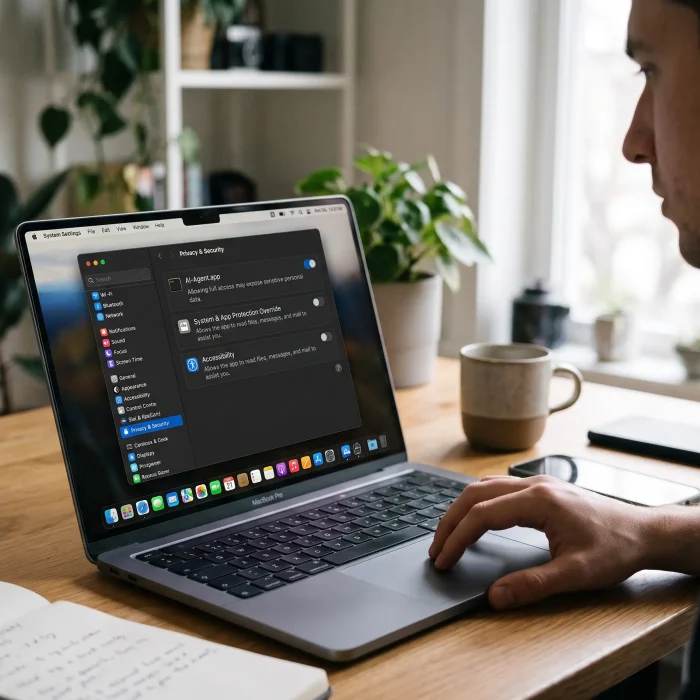
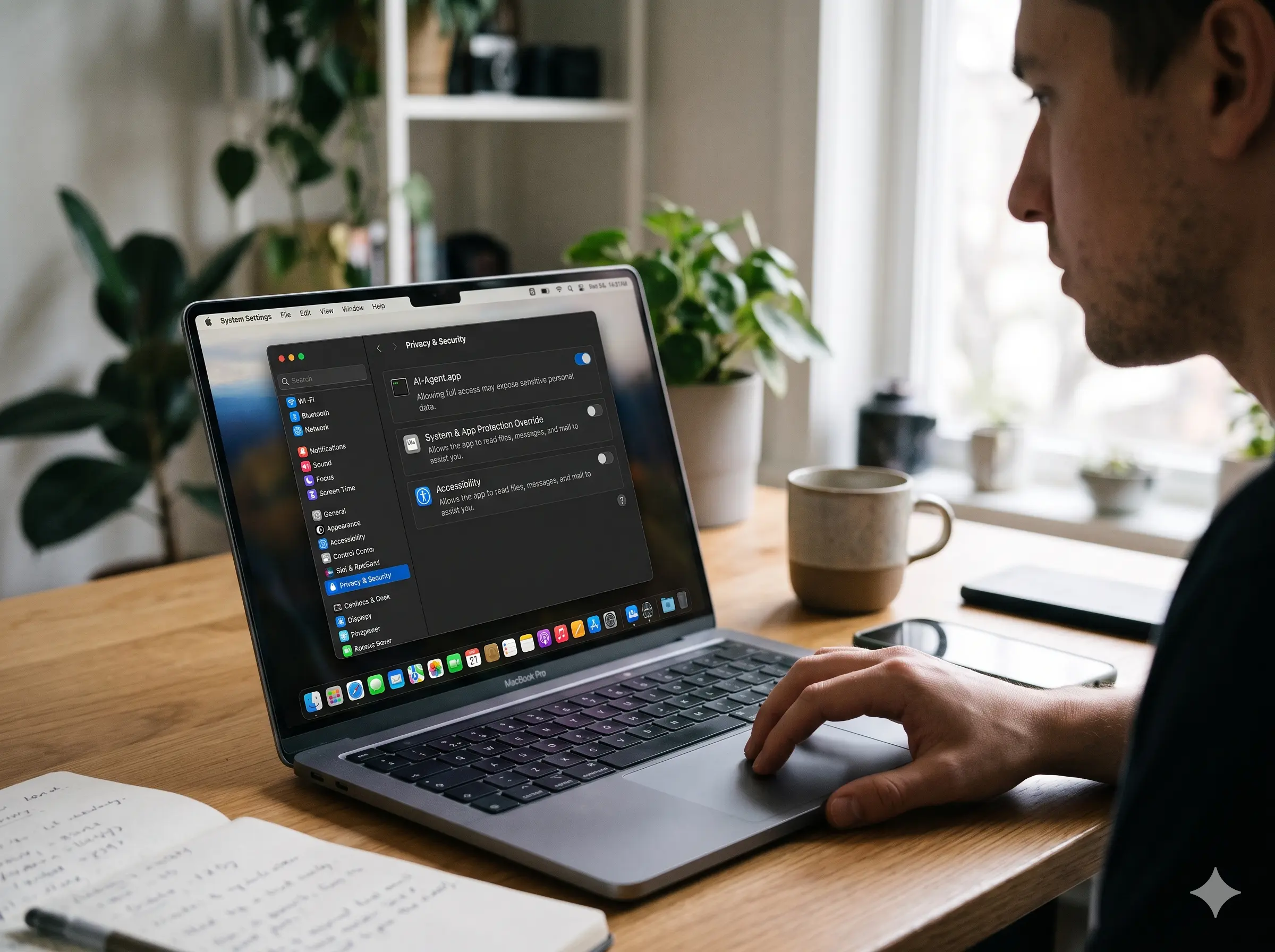
One major change involves separating existing Device Control and Data Access permissions into two distinct settings: System & App Protection Override and Accessibility.
This separation is intended to help users better understand the difference between granting an application control over other apps and allowing it to access sensitive information.
Apple is also simplifying the permission process. Users will be able to select the specific application they want to authorize from a list, rather than navigating a more complicated configuration process.
The company will also introduce additional warnings when users enable System & App Protection Override or Full Disk Access. These messages will explain the potential risks and encourage users to grant permissions only to applications they genuinely trust.
Another important improvement is increased visibility into the information an application can access when given extensive permissions.
More Control Over AI Automation
Apple is also introducing an option that allows applications to request permission whenever access is required.
This feature could be particularly useful for people experimenting with local AI agents. Instead of giving an AI tool permanent access to their entire system, users can decide whether to approve individual requests.
While repeated permission prompts could make automation less convenient, they provide an additional layer of protection against unwanted access.
A new transparency indicator will also appear when an application controls another app through the System & App Protection Override setting. This will help users recognize when software is actively interacting with other applications.
What This Means for Developers and Mac Users
The new security controls are expected to arrive with macOS 27.3.
Importantly, Apple is not banning AI agents or applications that require elevated permissions. Instead, the company is giving users more informed choices about how much access they provide.
Developers will need to update their onboarding experiences and ensure their applications continue functioning when users grant access to only selected folders or applications.
Apple will also offer special permission exceptions, known as entitlements, for applications that require Full Disk Access for legitimate purposes, including disk backups and assistive technologies.
Final Thoughts
Apple’s latest security changes highlight an important challenge facing the AI industry: making intelligent software more capable without compromising personal privacy.
As AI agents become increasingly integrated into everyday computing, users need meaningful control over what these tools can see and do.
Apple’s approach does not eliminate every potential security risk, but it introduces more transparency, clearer permissions, and greater user control.
The future of AI-powered computing will depend not only on how intelligent these tools become, but also on how responsibly they handle the information entrusted to them.