







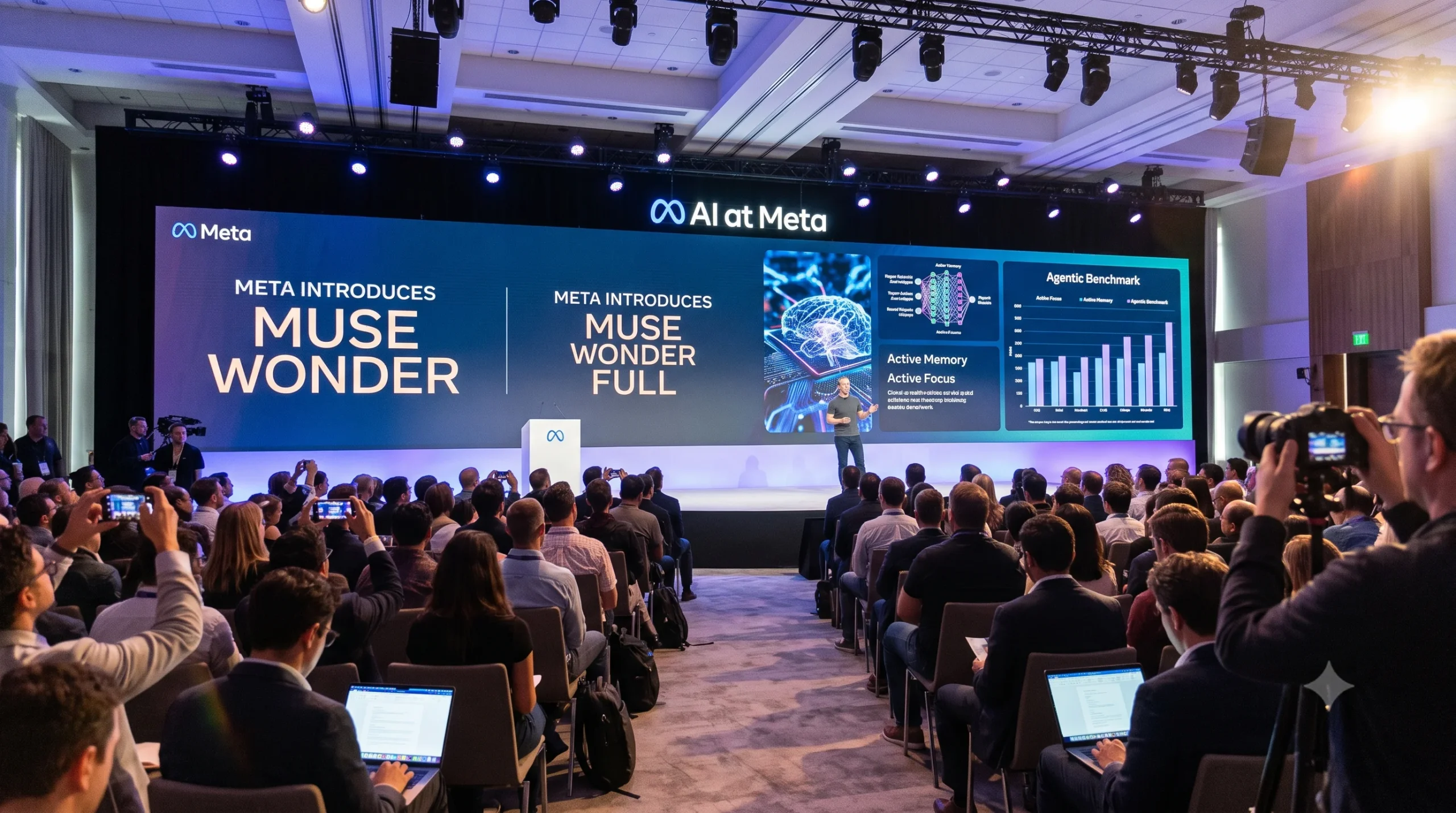
Meta is making a stronger move into advanced artificial intelligence with the launch of two new AI models, Muse Wonder and Muse Wonder Full. Developed by the company’s Superintelligence Lab, these models represent Meta’s first entry into the frontier AI model category, putting it in more direct competition with leading AI developers such as OpenAI and Anthropic.
The announcement signals a significant change in Meta’s AI strategy. After focusing on lightweight models and AI assistants, the company is now aiming to deliver more powerful systems capable of handling demanding tasks, retaining useful information, and supporting users over longer periods.
Bigger Models, Better Performance
Meta previously introduced Muse Spark, a model designed to provide quick responses while keeping latency low. The new Wonder models take a different approach, prioritizing greater capability and stronger performance on complex tasks.
According to Meta’s published model evaluations, Muse Wonder and Muse Wonder Full achieve benchmark results comparable to Fable 5.1 and GPT-6 Astra. The company also highlights improvements in areas such as coding and other challenging tasks that require more advanced reasoning.
Meta describes the launch as another step toward its long-term ambition of developing personal superintelligence. Rather than simply answering questions, the company wants its AI systems to become more capable assistants that can help people manage complicated activities and work through problems.
What Will Muse Wonder Cost?
The additional computing power comes with a price tag. Users accessing Muse Wonder through Meta’s Model API will pay $4 per million input tokens and $20 per million output tokens.
These rates place the model in a similar pricing range to GPT-6 Sol and Opus 5.5, giving developers another option when choosing an advanced AI model for their applications.
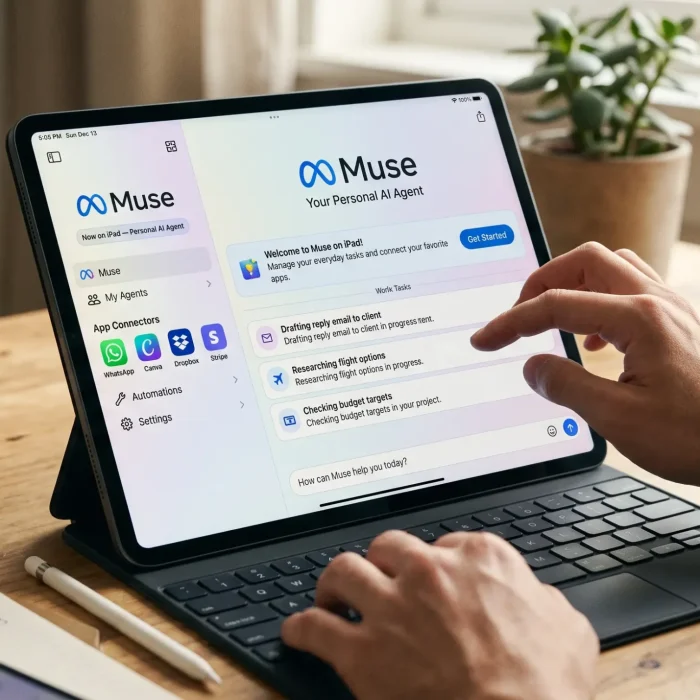
Muse Wonder Full, however, follows a different distribution strategy. Meta plans to make it available exclusively to Muse Code subscribers rather than offering access through the API. Both Wonder models will also contribute to powering Meta’s Muse agent.
This approach allows Meta to serve different audiences, from developers integrating AI into their products to subscribers who want advanced capabilities within the company’s own tools.
Memory Could Become Meta’s Biggest Advantage
One of the most interesting parts of the announcement is Meta’s focus on what it calls “active memory.”
The idea is to help AI remember important details shared by users and bring that information into future conversations. Instead of treating every interaction as an isolated exchange, an assistant with stronger memory could build a more useful understanding of a person’s preferences, projects, and ongoing activities.
Meta says it has invested considerable effort in helping its models retain and combine information across days, weeks, and months.
To demonstrate this capability, the company highlighted MemoryBench, a benchmark designed to evaluate how well AI systems learn continuously and construct useful memories. Based on Meta’s internal testing, Muse Wonder outperformed Fable, Opus, and Astra on this benchmark.
Research scientist Kavya Kopparapu emphasized the importance of helping AI distinguish and remember information that matters to users over time.
If these capabilities translate into everyday use, they could make personal AI assistants more valuable for managing long-term projects, remembering preferences, and providing assistance with greater context.
A New Chapter for Meta’s AI Ambitions
The launch also marks an important milestone following Alexandr Wang’s restructuring of Meta’s AI organization in August 2025. Since that change, Meta has introduced Muse Spark and its Muse agent, but it had not released a frontier model comparable to the leading systems from its competitors.
Muse Wonder suggests the company is now ready to compete more directly at the high end of the AI market.
However, benchmark results alone will not determine whether Meta succeeds. Real-world reliability, pricing, privacy, memory accuracy, and performance on everyday tasks will all influence how developers and consumers respond.
The bottom line: Meta’s Muse Wonder models represent a new phase in its AI strategy. By combining stronger reasoning capabilities with an emphasis on long-term memory, Meta is betting that the next generation of AI assistants will stand out not only through intelligence, but also through how well they understand and remember the people they help.