








The enormous infrastructure buildout behind the AI boom is beginning to reveal just how complicated it can be to turn ambitious data-center plans into operating facilities.
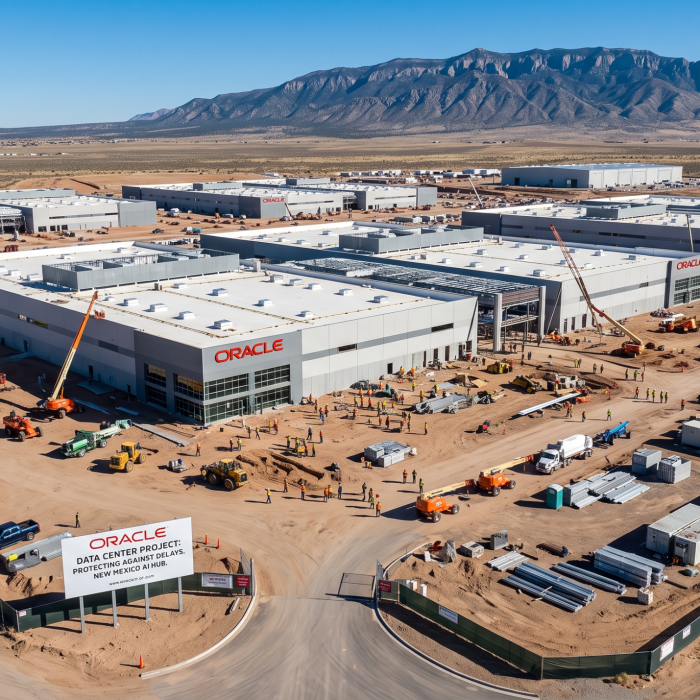
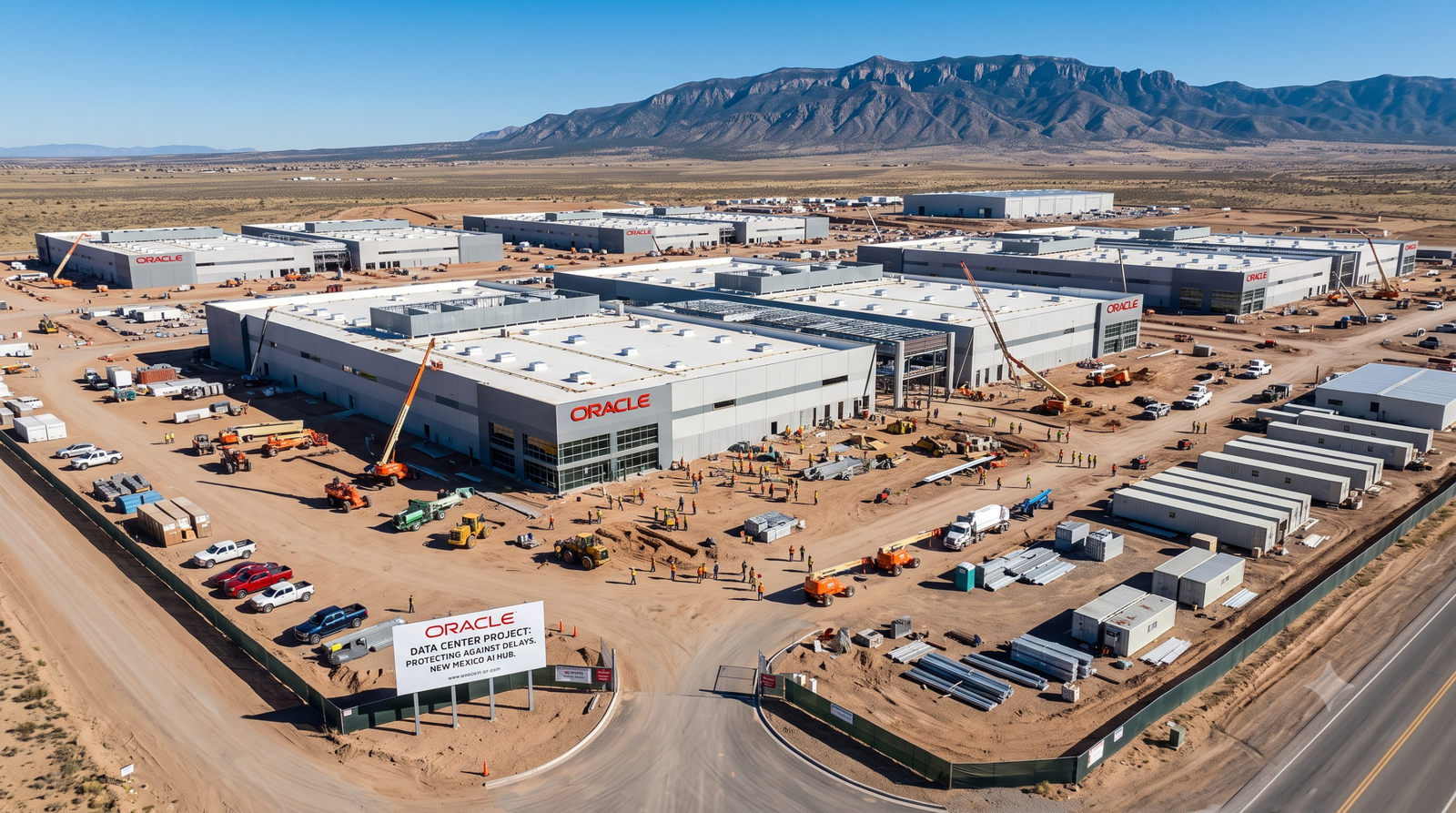
Oracle has issued a force majeure notice connected to Project Jupiter, a major AI data-center campus under development in New Mexico and associated with the Stargate infrastructure initiative.
The move doesn’t mean Oracle is abandoning the project. Instead, it appears designed to protect the company contractually if construction delays prevent the campus from becoming operational on schedule.
Project Jupiter is currently targeting a 2028 opening.
What Does the Force Majeure Notice Mean?
Force majeure provisions are commonly used in large energy and infrastructure agreements.
They can provide contractual protection when extraordinary circumstances outside a company’s control interfere with its ability to meet certain obligations.
According to reporting cited by TechCrunch, Oracle intends to remain Project Jupiter’s primary tenant.
The notice could instead allow Oracle to delay certain payments if the facility fails to meet its planned 2028 operational date.
Oracle says it currently doesn’t expect that to happen.
The company said Project Jupiter remains on its planned schedule and reiterated its commitment to New Mexico.
Blue Owl Capital, whose unit received the notice, has similarly said that it doesn’t alter the financial commitments associated with the multi-year development.
Energy Infrastructure Is Becoming the Bigger Challenge
The notice arrives as Project Jupiter encounters challenges surrounding one of the most important resources required by modern AI infrastructure: energy.
The campus is designed to support approximately 2.45 gigawatts of capacity, an enormous amount of power.
Its planned energy system involves gas-powered fuel cells supplied by Bloom Energy, making access to a reliable natural-gas supply critical.
That supply chain has already encountered complications.
An Energy Transfer pipeline intended to provide gas to the facility has reportedly been delayed by nearly six months.
Its planned operational date has moved to February 1, 2027, following multiple permit rejections.
The pipeline route was subsequently changed.
Another regulatory question remains unresolved as well.
An air-quality permit associated with the fuel-cell system is still under review, with New Mexico’s environment department facing a November 23 deadline to make its decision.
Stargate’s Ambitions Meet Infrastructure Reality
Project Jupiter is particularly significant because it is one of the flagship sites connected to Stargate, the large-scale AI infrastructure initiative involving Oracle, OpenAI, and SoftBank.
AI companies increasingly require enormous computing facilities filled with advanced accelerators, networking equipment, cooling infrastructure, and power systems.
But building those facilities requires much more than buying GPUs.
Developers need access to land, electricity or alternative generation, water and cooling infrastructure, pipelines, environmental permits, financing, construction resources, and community support.
Any one of those components can potentially affect a project’s timeline.
Project Jupiter demonstrates how the AI infrastructure race is becoming as much an energy and construction challenge as a computing challenge.
Local Opposition Adds Another Layer
The New Mexico project has also faced criticism from some residents and environmental organizations.
Concerns surrounding large data centers increasingly involve their energy consumption, environmental impact, local infrastructure requirements, and broader effects on surrounding communities.
Project Jupiter has consequently become part of the political debate in New Mexico ahead of the U.S. midterm elections.
According to Bloomberg reporting cited by TechCrunch, Oracle has responded with public outreach intended to address criticism and build local support for the development.
AI’s Infrastructure Boom Faces a Real-World Test
The force majeure notice doesn’t establish that Project Jupiter will be delayed.
Oracle continues to say the campus remains on schedule.
But the situation highlights something increasingly important about the AI boom.
Building frontier AI isn’t simply about creating better models.
It increasingly requires gigawatts of power, massive financing, complex energy infrastructure, regulatory approvals, and years of construction.
The industry’s biggest AI ambitions therefore depend on solving physical infrastructure problems that software companies historically haven’t had to manage at this scale.
The next bottleneck in the AI race may not be algorithms or chips. It could be the ability to build and power the enormous data centers those algorithms depend on.