




Apple’s first keynote under John Ternus argues the phone becomes more central as AI arrives, not less.
Twenty-five years ago, Steve Jobs stood in front of a tombstone labelled “Beloved PC” and told an audience the machine was not dying. On Wednesday, John Ternus made the same argument about the iPhone in his first keynote as Apple’s chief executive. The device, he said, is the hub, not the thing being replaced.
The pitch
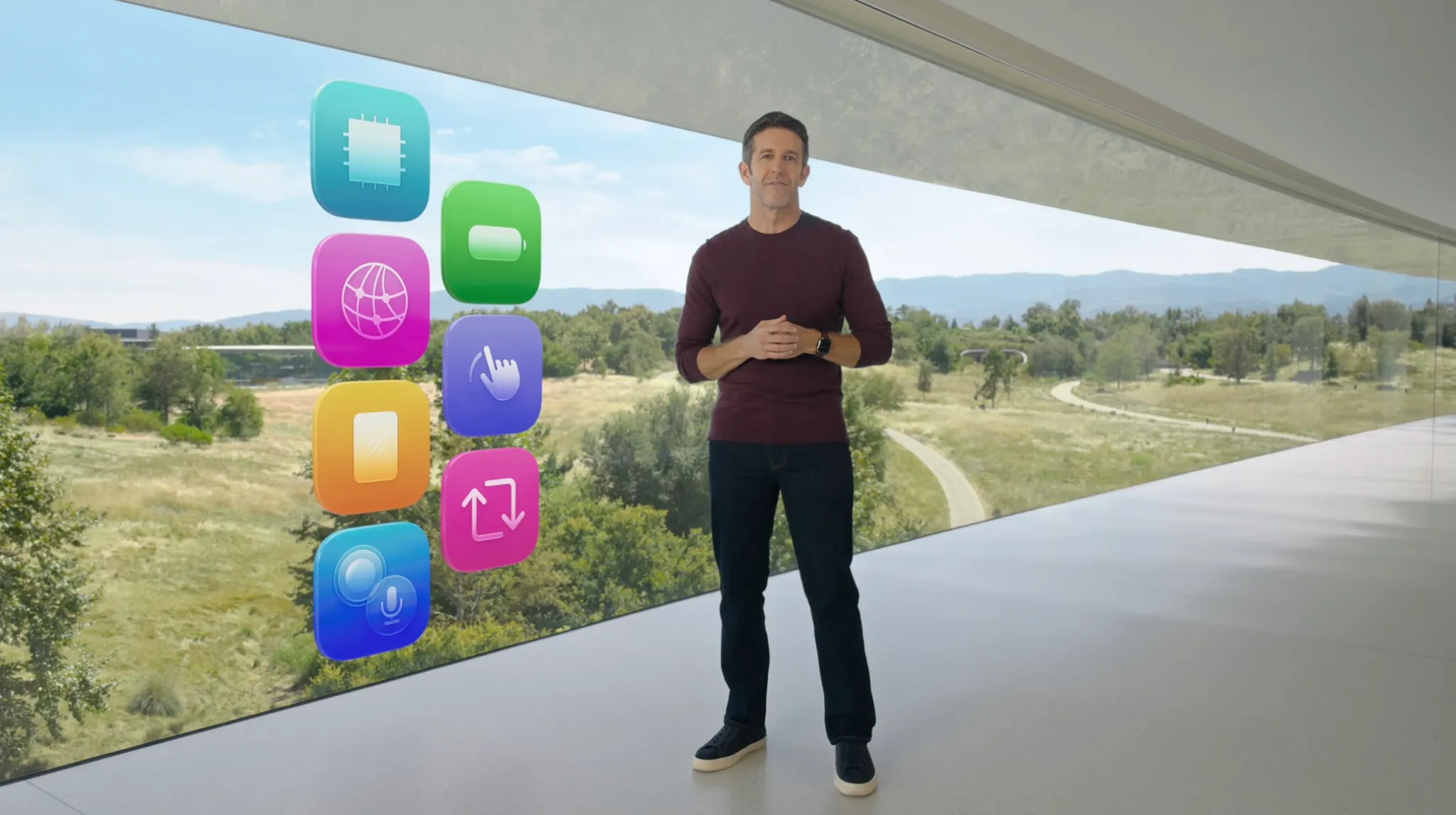
Ternus placed the iPhone at the center of what he calls an intelligent personal assistant strategy. He asked how you would design the ideal hub from scratch, then listed the parts it would need:
- Fast silicon: among the most powerful personal computing chips available today.
- High-resolution cameras: already standard on every unit Apple ships.
- Persistent networking: connected everywhere, with no paired device required.
- On-device AI: processing handled on the phone, not elsewhere.
The iPhone already has all four. That is the entire argument, and it is deliberately unglamorous.
It also breaks with the last decade. Tim Cook spent years telling investors Apple was bigger than one product. Ternus is doing the reverse and planting the flag back on the phone.
The Jobs echo
In 2001, at a Macworld keynote in New York, Jobs answered critics who said the PC was finished. He put a tombstone for the “Beloved PC” on screen, named the bearish voices, including Walt Mossberg and the heads of Compaq and Gateway, and told the room the machine was evolving rather than dying.
His argument was that the Mac was entering a third great age as a digital hub, linking camcorders, digital cameras and DVD players and adding value to each. Ten months later he pulled an iPod out of his pocket. It sold hard, carried Apple’s profits quarter after quarter, and cleared the path to the iPhone.
What is still missing
Nobody knows whether Ternus is sitting on an iPod-sized surprise. What he does have is position. Rivals have thrown wearable after wearable at the iPhone and none has stuck. Plenty of people leave home without a laptop. Almost nobody leaves without a phone. When AI is hungry for compute, owning the most capable device people actually carry is worth more than a new category.
The obituaries have been running for months. Fortune ran a piece in May giving the smartphone a limited shelf life. Axios framed the end of the Cook era as a hunt for whatever replaces the iPhone. Ternus’s response is that the hunt is the wrong exercise. Approaching twenty years old, the iPhone is not the thing being swapped out. It is the thing everything else plugs into.
Jobs had an iPod ready ten months later; the clock on Ternus started Wednesday.
If you are building AI products or planning marketing for them, this is a signal about distribution. Apple is not moving the center of gravity to a new device class, so the phone stays the surface where your product gets used. Budget for iPhone-first experiences and on-device constraints rather than betting a roadmap on wearables that have not landed yet.