








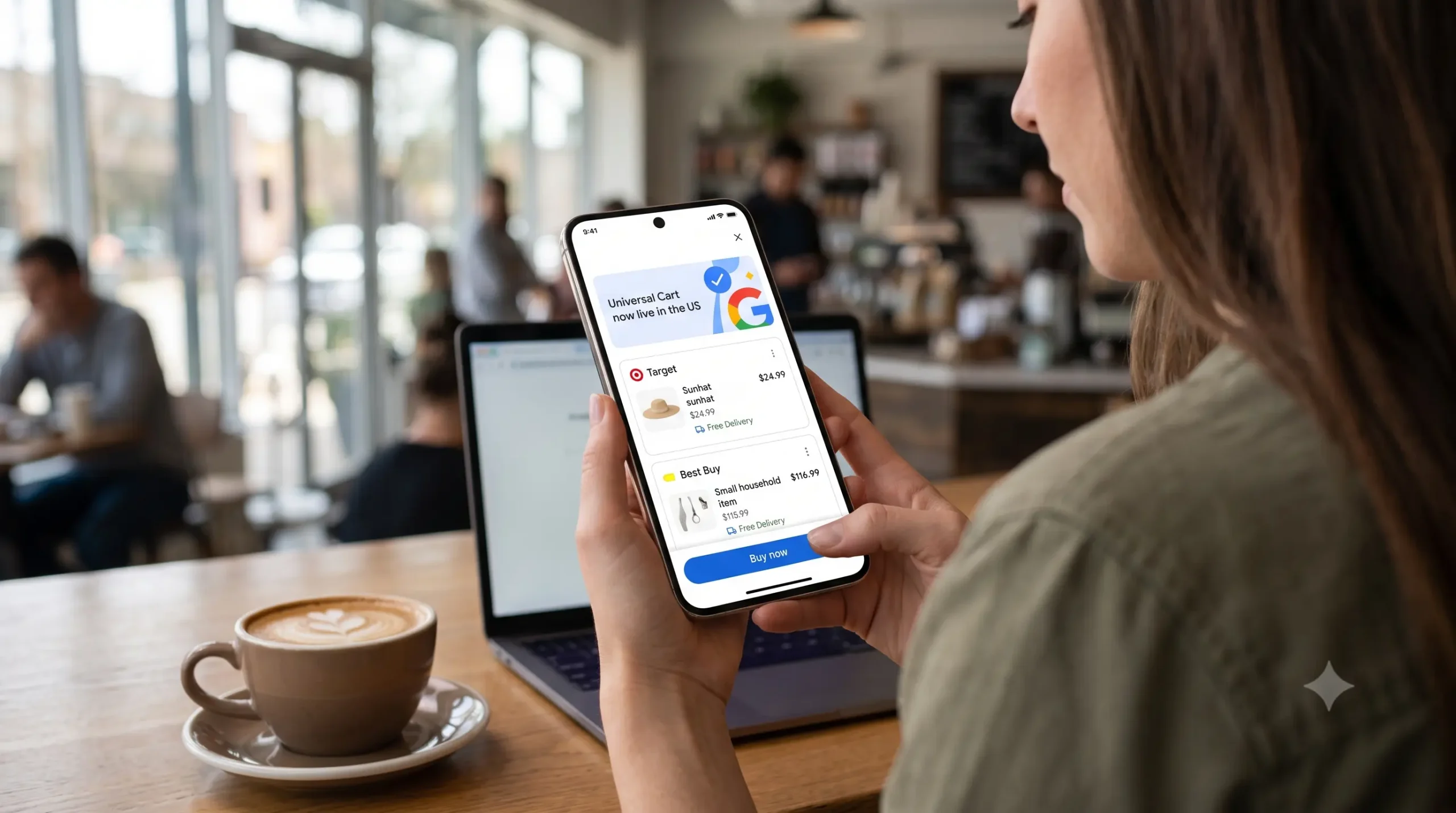
Online shopping is becoming more intelligent as technology companies continue integrating artificial intelligence into everyday purchasing decisions. Google is taking another step in this direction with the launch of its new Universal Cart feature in the United States, designed to help shoppers save products, track prices, and manage potential purchases from different retailers in one place.
The feature was initially introduced at Google I/O in May and is now available to U.S. users. Its main goal is to simplify the shopping experience by allowing people to collect products they discover through Google Search and the Gemini app without having to remember individual websites or search for the same items again.
One Place to Organize Your Shopping List
Online shoppers frequently browse several websites before deciding what to purchase. They might discover a product through Google Search, explore alternatives using an AI assistant, and revisit a retailer later to complete the transaction. Keeping track of everything can quickly become confusing.
Google’s Universal Cart aims to solve this problem by providing a central place to manage saved products from multiple retailers. Users can add interesting items to their cart while browsing and return to them whenever they are ready to make a decision.
Instead of restarting the search process, shoppers can pick up where they left off. This approach could be particularly useful for people comparing prices, researching electronics, shopping for household products, or planning larger purchases over several days.
Price Alerts and Restock Notifications
Another important part of Universal Cart is its ability to help shoppers monitor products after saving them.
Google says the feature can notify users when an item’s price decreases or when a previously unavailable product returns to stock. These alerts could make it easier to identify purchasing opportunities without repeatedly checking retailer websites.
For budget-conscious consumers, price tracking can be especially valuable. Rather than buying something immediately or manually monitoring multiple stores, shoppers can save their preferred products and wait for a more suitable opportunity.
However, these notifications do not guarantee that every saved product will receive a discount or become available again.
AI Assistance for Better Shopping Decisions
Universal Cart also aims to make purchasing decisions more personalized. Google says its shopping experience can consider credit card benefits when helping users choose a payment method and highlight relevant promotional codes.
These capabilities could help shoppers discover savings they might otherwise overlook. For example, a customer with a card offering specific purchase benefits may receive guidance that helps them choose a more advantageous payment option.
By combining saved products, price monitoring, promotions, and personalized assistance, Google is positioning Universal Cart as more than a traditional online shopping basket.
The Technology Behind Google’s Shopping Strategy
The checkout experience is connected to Google’s Universal Commerce Protocol (UCP), an open standard introduced earlier in 2026. The protocol is designed to help retailers and AI-powered agents communicate across different stages of the shopping process, including checkout.
This technology reflects a broader shift toward AI-assisted commerce, where digital assistants can do more than recommend products. They are increasingly being developed to help users compare options, manage purchasing tasks, and move closer to completing transactions.
Universal Cart also complements Google’s other AI shopping initiatives. These include conversational product discovery through AI Mode in Search and the “Let Google Call” feature, which uses an AI agent to contact nearby businesses and check product availability.
Competition in AI-Powered E-Commerce Is Growing
Google is entering a competitive market. Amazon, OpenAI, and other technology companies are also developing AI-driven shopping experiences that aim to make product discovery and purchasing more convenient.
The larger opportunity is to turn AI assistants into practical shopping companions that understand customer needs and help manage the entire buying journey.
For Google, Universal Cart could strengthen the connection between Search, Gemini, and online retailers. For consumers, its success will depend on how smoothly it works across stores, how useful its alerts are, and whether its recommendations genuinely save time and money.
Final Thoughts
Google’s Universal Cart represents another move toward a more connected and personalized online shopping experience. By bringing product discovery, saved items, price alerts, and shopping assistance together, the company hopes to reduce the effort involved in managing purchases.
As AI continues to reshape e-commerce, the next stage of online shopping may involve less manual searching and more intelligent assistance. The challenge for Google and its competitors will be making these tools reliable, convenient, and genuinely useful for everyday shoppers.