







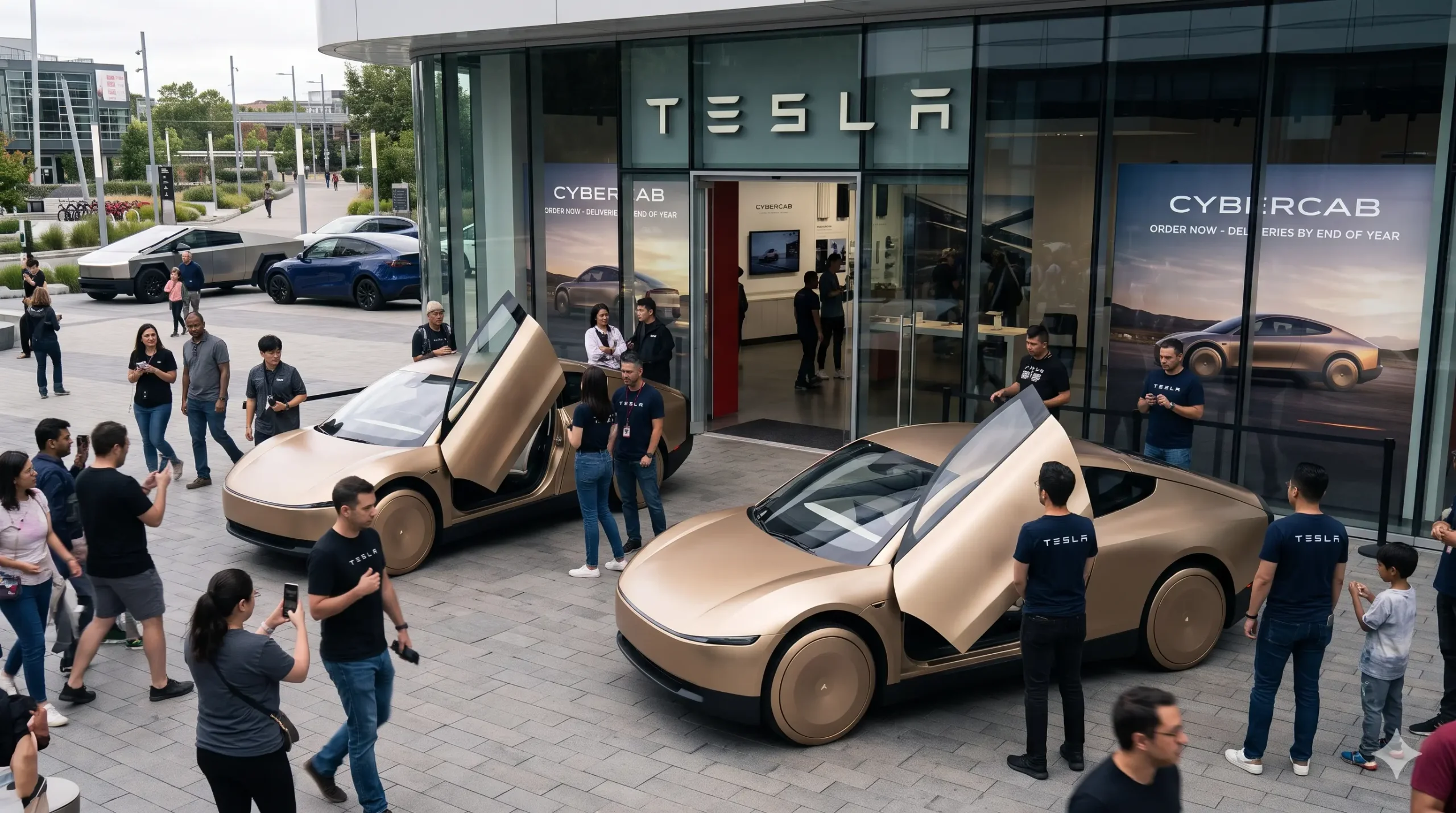
Tesla is preparing to bring its steering-wheel-free Cybercab to outside buyers by the end of 2026, but regulatory scrutiny and delays in self-driving technology could complicate its plans.
Tesla is moving closer to turning its autonomous transportation vision into a commercial business. The electric vehicle manufacturer has announced plans to begin selling its futuristic Cybercab to customers before the end of this year, despite an ongoing federal investigation into the vehicle’s safety compliance.
The announcement came during Tesla’s third-quarter earnings call, where company executives discussed how they intend to introduce the unusual two-seat vehicle beyond Tesla’s own robotaxi operations.
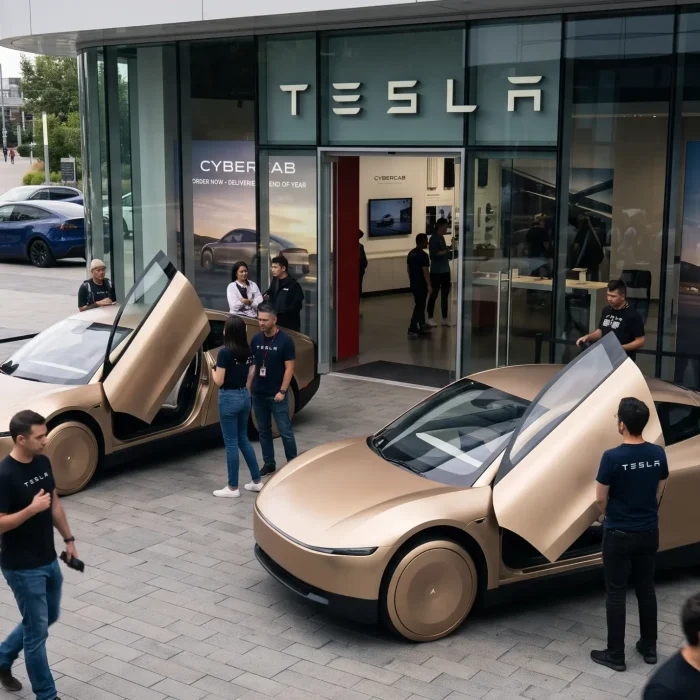
Unlike conventional cars, the Cybercab features a gold-colored exterior and has no steering wheel or traditional driving controls. Its design reflects Tesla’s ambition to develop vehicles specifically for autonomous transportation rather than personal driving.
Tesla Will Begin With a Limited Rollout
Lars Moravy, Tesla’s vice president of engineering, explained that Cybercabs currently coming off production lines are intended for the company’s own robotaxi fleet.
However, Tesla also plans to supply purpose-built autonomous vehicles to external customers. The initial rollout will remain relatively small while the company learns how to handle deliveries, vehicle ownership, fleet operations, and the practical challenges of managing driverless transportation services.
Tesla expects to expand the program gradually as it gains experience with the business model.
The company had already hinted at this possibility during its Cybercab event in Austin last month. It even introduced an online form for people interested in purchasing robotaxis. The latest announcement provides a clearer indication that Tesla intends to pursue sales outside its own fleet.
A Different Direction for Tesla’s Robotaxi Strategy
For years, CEO Elon Musk has promoted the idea of a large network of inexpensive, self-driving taxis. His earlier vision relied heavily on existing Tesla vehicles becoming robotaxis through software updates.
That approach has yet to deliver the widespread autonomous taxi network he envisioned. The Cybercab represents a more specialized strategy: building vehicles designed from the beginning for driverless transportation.
Musk has described the Cybercab primarily as a transportation service vehicle rather than something customers would purchase for everyday personal use. Tesla expects most Cybercabs to remain company-owned and operate through its ride-hailing services, although outside fleet operators could also become customers.
This approach could allow Tesla to develop a dedicated autonomous transportation network while gradually expanding its commercial reach.
Full Self-Driving Remains a Major Challenge
Tesla’s plans also highlight a gap between its robotaxi ambitions and the capabilities currently available to ordinary vehicle owners.
The company offers Full Self-Driving (Supervised), a driver-assistance system that can automate several driving tasks. However, drivers must remain attentive and ready to take control whenever necessary. It is not a fully autonomous system that allows people to stop supervising the vehicle.
Musk said Tesla expects to introduce an unsupervised version of Full Self-Driving during the second quarter of 2027. That timeline represents another delay for customers who have paid for or subscribed to the technology while waiting for fully autonomous driving.
If both schedules remain unchanged, outside fleet operators could potentially purchase Cybercabs for commercial robotaxi services before existing Tesla owners receive unsupervised driving capabilities in their personal vehicles.
Federal Investigation Could Delay Progress
Regulatory approval remains another important hurdle. The National Highway Traffic Safety Administration (NHTSA) opened an investigation into the Cybercab last month, shortly after the vehicles began operating on public roads in Austin.
The investigation raises questions about whether a vehicle without conventional steering controls meets applicable federal safety requirements.
Tesla’s proposed year-end sales timeline therefore depends not only on production and fleet management but also on how regulators assess the vehicle.
What Comes Next for Tesla?
The Cybercab could become an important part of Tesla’s long-term business strategy, shifting the company beyond selling electric cars toward providing autonomous transportation services.
However, commercial success will depend on regulatory clearance, reliable self-driving technology, and whether fleet operators can run these vehicles safely and economically.
Tesla has now outlined a more concrete path toward external Cybercab sales. The next major test will be whether it can turn its ambitious timeline into a practical, approved transportation product before the year ends.